
Hillbilly Rhapsody
Culture shock

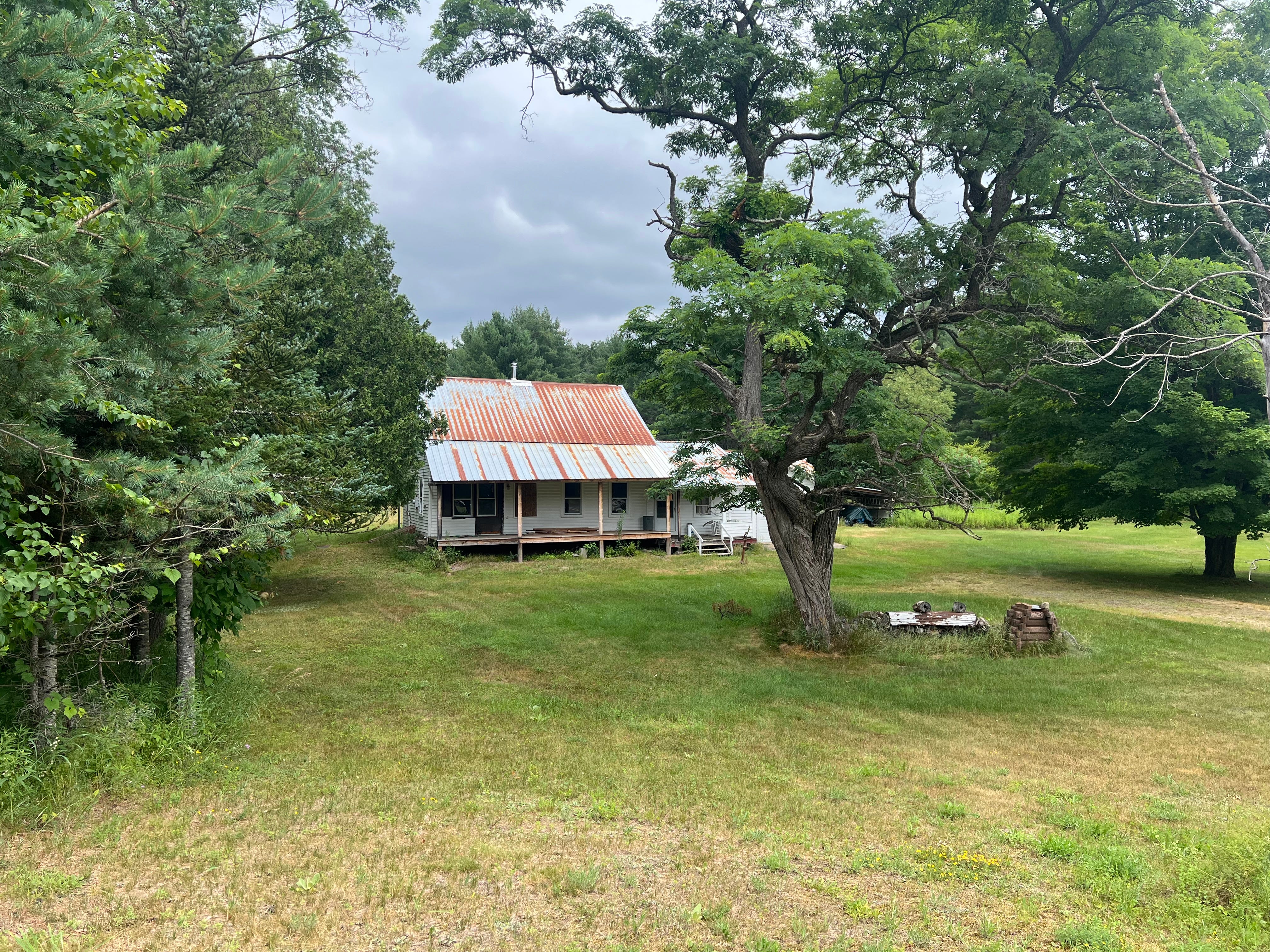
The differences are immediately obvious. When you cross through the other side of the looking glass into rural or “Real” America, as they say, certain things are inverted.
For example, at the dinner table in modern, sophisticated America, you wouldn’t describe the inner workings of your bowels or how your regularity was functioning that day, especially not when someone else is about to bite into their corn on the cob or take a sip of their Arnold Palmer. But here, it happens.
In rural America, by contrast, you shouldn’t sit down at the dinner table and expound upon the inner workings of your emotional life, your trauma, your “processing” of what you’re currently going through, or your identity as it relates to mental health. To do so will result in blank, mute stares and the absolute abyss of a non-response.
“Bellyaching” (the colloquial word for complaining) is not respected here. Sensitivities of an arcane nature (eating gluten-free, for example, even if it is medically warranted) elicit a dog-like cock of the head and a quizzical squinting of the eyes. Any sort of voiced examination of the proverbial contents of one’s bellybutton (including a minute analysis of each particle’s deeper meaning) is greeted with stone cold silence.
The stoicism in this part of the world, particularly among older generations, is truly on another level. In the country we have psychic grit and bodily frankness. In the cities we have physical politesse and emotional bloodletting.
I’m a millennial, so there’s a certain amount of psychological wokeness I’ll never get away from. It’s like people who were raised Catholic: no matter how much they forswear it later on, it’ll always be part of them. I want to sit and talk with others, endlessly, about feeling, emotion, and the experience of being alive. I do not want to hear belches resounding while sipping my evening tea.
I remember objecting to these same emanations as a child, in my great-grandmother’s living room.
“What do you want me to do, ‘splode?” she’d screech.
‘Splode, verb (Central New York rural English): to explode.
Other familiar words have re-entered my ears.
Prih-near (sp?), adverb: nearly, almost, pretty near. Example: “The sheets are prih-near dry.”
Britches, noun (plural): pants.
Draws, noun: underwear. Common example: “I’ve lost mah draws!” (Followed by laughter.)
Words like prih-near, I learned, are part of the North Country dialect, though they may also be heard in more southern Appalachian areas. This is frontier language, a way of expressing what needs to be said as simply and economically as possible. It is rudimentary in the way a quilt is, or a wood stove.
In historian Frederick Jackson Turner’s famous Frontier Thesis of 1893, he explains the American character as having been forged by confrontation with nature. Rather than Americans merely “civilizing” the continent as we moved westward, he writes, America re-wilded us. “The wilderness masters” the American, he proclaims. “It takes him from the railroad car and puts him in the birch canoe. It strips off the garments of civilization and arrays him in the hunting shirt and the moccasin . . . at the frontier the environment is at first too strong for the man. He must accept the conditions which it furnishes, or perish.” Even once an area is established and inhabited, it “still partakes of the frontier characteristics.”
A hand-painted picture of a Native American hangs behind the stand where my family member keeps remote controls and her daily devotional. It seems strange to sit and watch TV in front of a painting of a people we genocided, the way the glassy eyes of a taxidermied deer feel eerie to someone not accustomed to seeing the spoils of hunting mounted on a wall. Yet in the way that there is a sublime respect for the deer, there is also an uncanny respect for the indigenous person in her painted canoe. I am surprised when my cousin tells me to take a dreamcatcher from a “Free” box at the tag sale on her street. She’s a fundamentalist Christian, and I would think she’d find such items a token of witchcraft. “Not at all,” she says when I ask her about it. “There’s nothin’ wrong with it at all.”
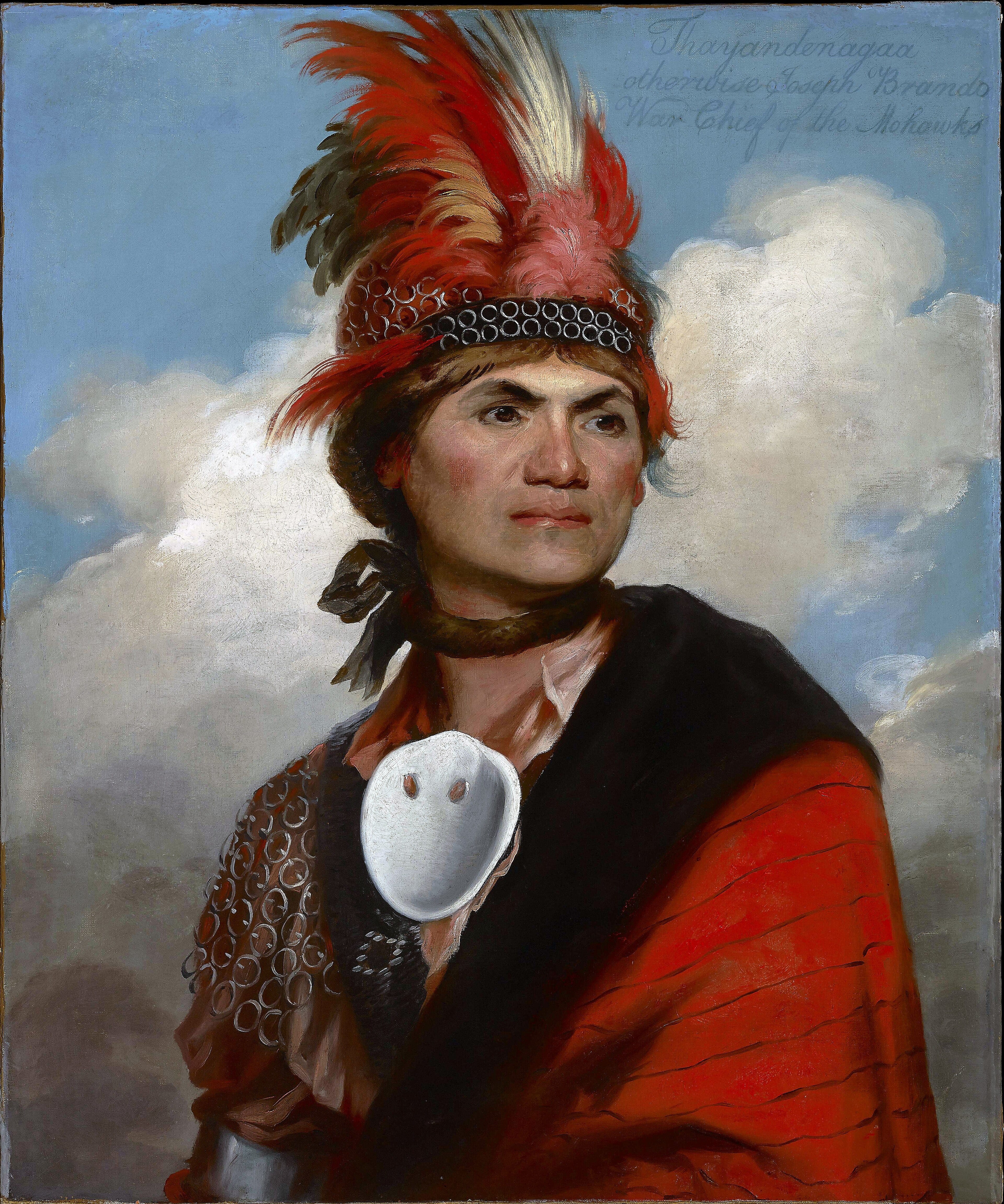
The Mohawk Valley of central New York, where I spent my first years, was once known as the Gateway to the West. The Mohawk River allowed access to the American heartland and was the site of fierce and blood-drenched battles between patriots and the allied forces of Mohawks and Royalists. That pride in the Revolution can be felt today as one drives through the area and sees flag after American flag. The region is viscerally patriotic, in contrast to the chic anti-Americanism of the Hudson Valley or the quiet sophistication of the Berkshires.

Some call the Mohawk Valley “America’s First Frontier.” And like all experiences of the frontier, according to Frederick Jackson Turner, it was “productive of individualism” and “antipathy to control, and particularly to any direct control.” The conditions of this life, he explained, resulted in specifically American characteristics: “coarseness and strength,” a “practical, inventive turn of mind,” and a “restless, nervous energy.” These are and forever will be traits of the frontier, destined to remain in the makeup of its inhabitants and their descendants long after the initial conquest’s end. As much as the stoicism of my family feels foreign to me after long years in the American cities, I recognize it as also deeply mine.
The historian Walter Prescott Webb remarked on the character such places at the edge of wilderness produce:
Where population is sparse, where the supports of conventions and laws are withdrawn and men are thrown upon their own resources, courage becomes a fundamental and essential attribute in the individual. [One] had little choice but to be courageous . . . Where men are isolated and in constant danger or even potential danger, they will not tolerate the coward.
I sometimes wonder if the American passion for convenience arose from our collective memory of the frontier. There may be some blood-deep cultural recollection of everything being excruciatingly difficult, and who wouldn’t want to microwave a Hot Pocket after your ancestors had to shoot meat with their bare hands and flatten dough with a rolling pin? I am not alone in seeking something deeper, and older, and wanting to rediscover the strength that is my inheritance.
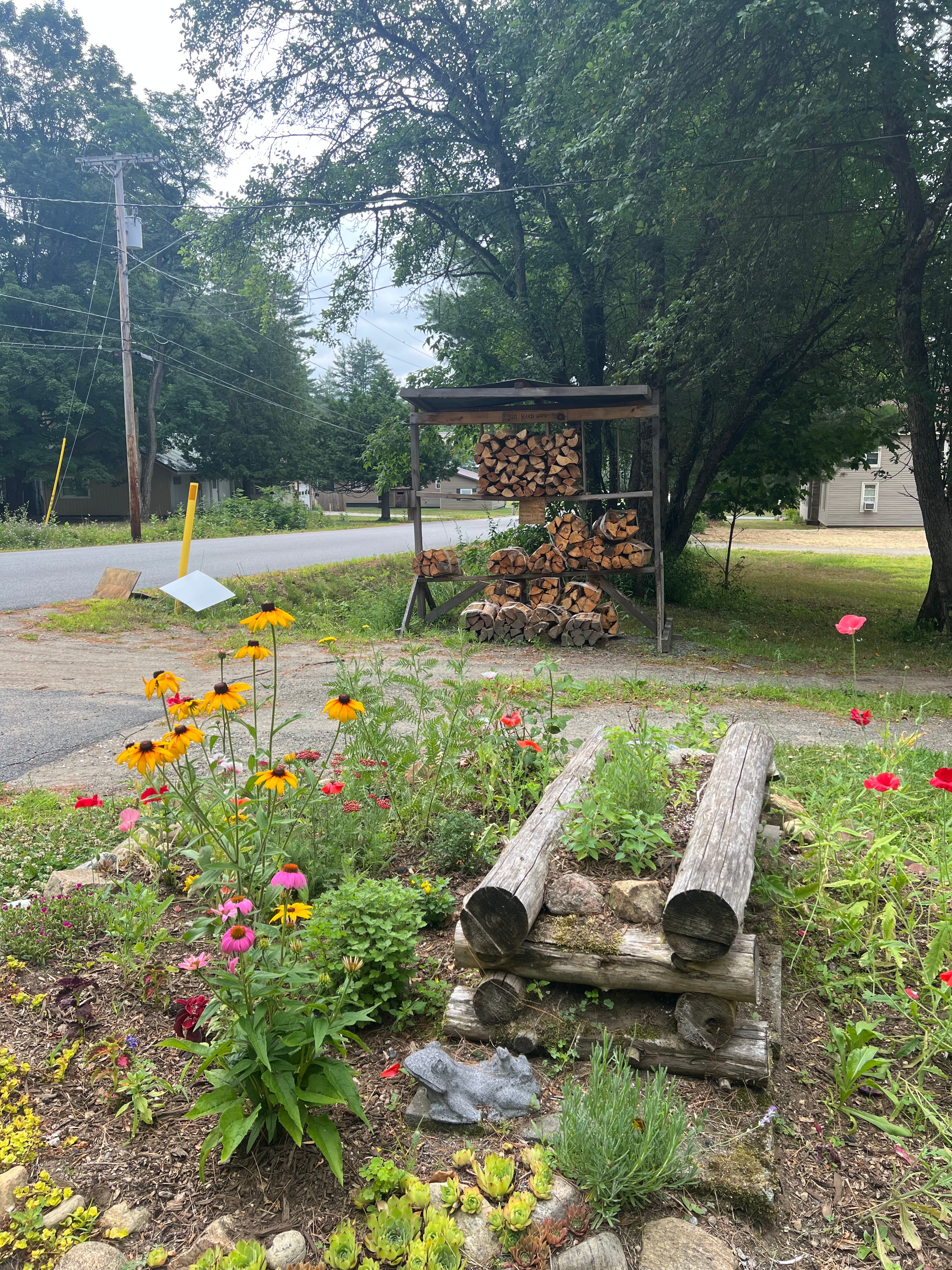
I walked along a quiet road last week, lured by a handmade sign that promised a vegetable stand a half-mile away. The farther I went into the woods, skin tingling with a sense of danger I subversively enjoyed, I saw homesteads like anything one might have imagined from another century. A woman was selling lettuce, eggs, sourdough, waffles, and herbs on a wooden bookshelf outside her house, and bundles of wood alongside her driveway. She was not present, and was probably in some faraway garden, so I stood and looked at her home. The air was clean and smelled like pine.