Dubious Luxury

There is no better feeling than waking up when it is still dark out, renting a car for the day (I’m still saving up for a truck), and driving out of the city limits. The click-click of the left-hand blinker as I’m stopped on Massachusetts Avenue (like someone saying: “Ready! Set!”) and the “GO!” of turning onto Waterside Drive, knowing that now, I am escaping. Outlaw country playlist queued up on the Bluetooth, eyes on the road. I pass the Lincoln Memorial and turn right onto Arlington Memorial Bridge. After the folks headed to the airport peel away, I’m flying free onto Route 50 which becomes Route 29. Which becomes the countryside of Old Dominion.
At this point I still prefer U.S. highways to the interstate. Even if it takes longer to get where I’m going. There is something about leaving the membrane of the Beltway that frees one’s thoughts, like one has managed to elude a psychic forcefield. Even if I am only five minutes outside of the city, I have still entered the great expanse of America. My beliefs and perceptions become clearer, and distance provides wisdom. I can detach from things that seemed important an hour ago.
I’ve been thinking a lot about doom lately — about “doomerism,” or any kind of similar fatalistic posture. And most of you will know by now that I don’t believe in it at all. I can’t. For people like me in recovery, it doesn’t work. We can’t succumb to that kind of thinking if we want to stay well.
I am not in A.A., but I am in another 12-Step program. There are many fellowships that are built on the A.A. model. Narcotics Anonymous, for drug users, is one of them. Sex and Love Addicts Anonymous is another. Overeaters Anonymous and Eating Disorders Anonymous, too. Then there are the ones I like to call the “fucked-up family background” programs: Al-Anon, CoDA (Codependents Anonymous), ACA (Adult Children of Alcoholic and Dysfunctional Families). These programs work because they provide a spiritual solution that normal therapy or counseling doesn’t. They acknowledge the importance of humility when faced with something like addiction, or a propensity for unhealthy attachments. They work because they allow a person to transmute their worst qualities, or their “defects of character,” into something that can be used by God. Once you offer that stuff up, it’s game over for bad outcomes. God will take the worst of you and make it into gold, or “turn your scars into stars,” as a nurse once told me.
It’s not perfect being “in the rooms,” as we call it. There can be conflict. Controlling elders. Annoying dogma. Endless tip-toeing around others’ spiritual beliefs, although the discipline of toleration is a good thing (even if someone says their Higher Power is a house plant). You are forced to unite with others in a common purpose, because if you don’t, you won’t survive.
Recovery isn’t compatible with a doomer mentality, or any other kind of fashionable affectation based on resentment toward a person, a group of people, or even a civilization. Anyone who’s read it knows that the A.A. Big Book is rather antiquated (sometimes hilariously), but it contains some real gems:
It is plain that a life which includes deep resentment leads only to futility and unhappiness. To the precise extent that we permit these, do we squander the hours that might have been worth while. But with the alcoholic, whose hope is the maintenance and growth of a spiritual experience, this business of resentment is infinitely grave. We found that it is fatal. For when harboring such feelings we shut ourselves off from the sunlight of the Spirit. The insanity of alcohol returns and we drink again. And with us, to drink is to die.
If we were to live, we had to be free of anger. The grouch and the brainstorm were not for us. They may be the dubious luxury of normal men, but for alcoholics these things are poison.
Living Clean is a text by Narcotics Anonymous that talks about how to live the rest of your life once you’ve gotten through early sobriety. Whereas before, we may have been willing to tolerate bad situations, the deeper we get into clean time “our tolerance for pain diminishes … we are less willing to go along with things that wound our spirit. As we have more experience with the hope and healing that follows, we can recognize surrender as a way we put our feet back on the ground.”
Similarly, we can laugh.
We learn not to take ourselves too seriously. At the end of the road [i.e. at rock bottom], nothing was funny anymore, but as we let go of worry, shame, anger, and confusion, we start to relax. One of the gifts of recovery is regaining our sense of humor.
We also learn to trust ourselves. We learn to listen to our inner guidance, and not to put others on a pedestal even if they are a published author, a politician, or someone that others revere. This is consistent with the way my great-grandmother thought. She didn’t like to see anyone get too big for their britches. She was simultaneously very religious and wholly irreverent. One could summarize her disposition with a reference to Shania Twain’s 1998 hit from Come On Over:

Or, one could offer a citation from Christopher Hitchens’ Letters to a Young Contrarian: “Picture all experts as if they were mammals.” Another elderly member of my family recently shared a country aphorism: “You know what they say about experts. An ex is a has-been and a spurt is a drip under pressure.” It took me a while to understand that “drip” is Silent Generation-speak for a boring person, and doesn’t connote an exceptional outfit, as it does for us millennials (e.g. the lyrics from Roddy Ricch’s “Ballin’:” All this designer on my body got me drip drip).
Or, one could simply quote my favorite 12-Step affirmation, one that I have repeated to myself many times on the way to meet with intimidating or “important” people:
I see myself as equal to others.
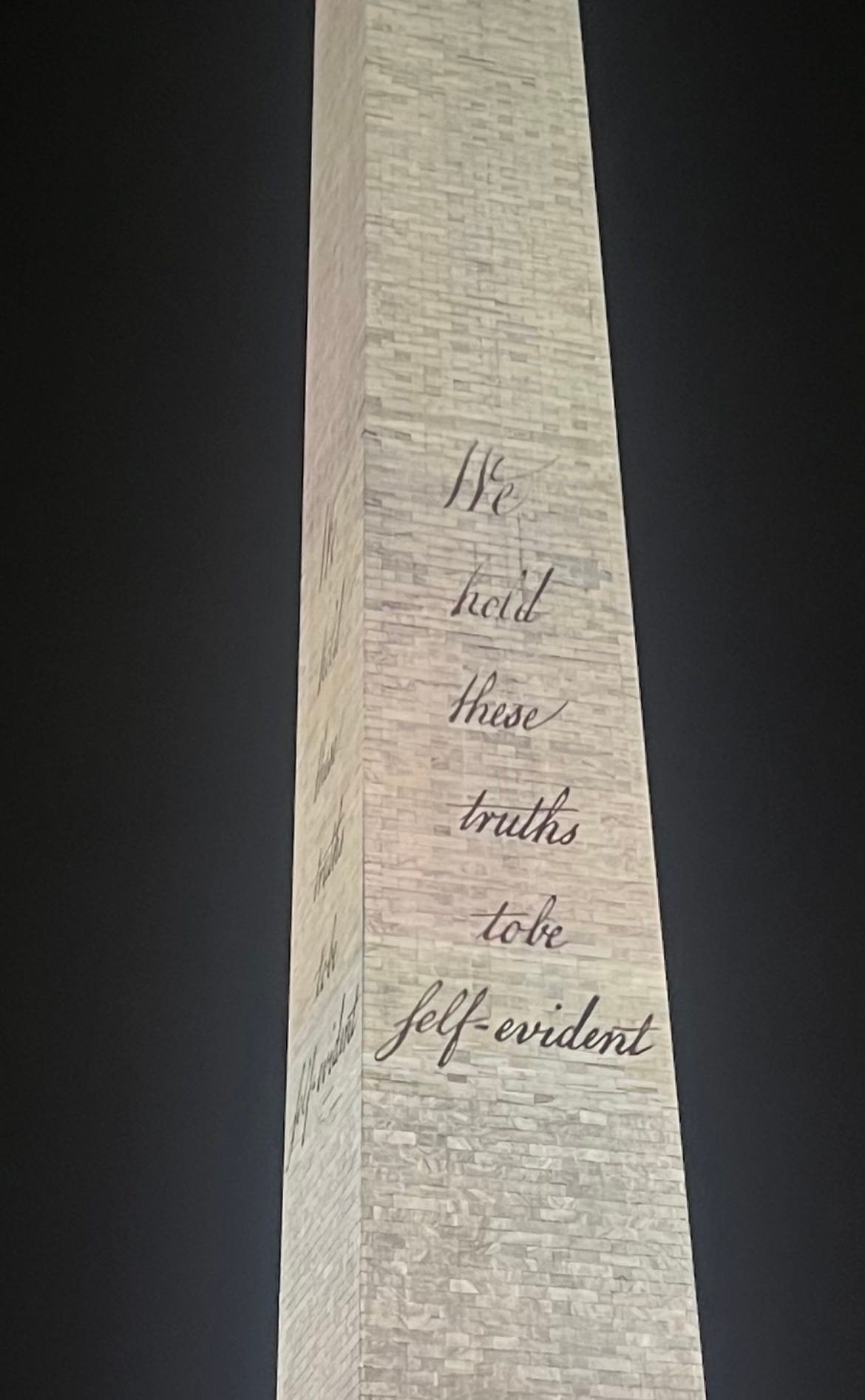
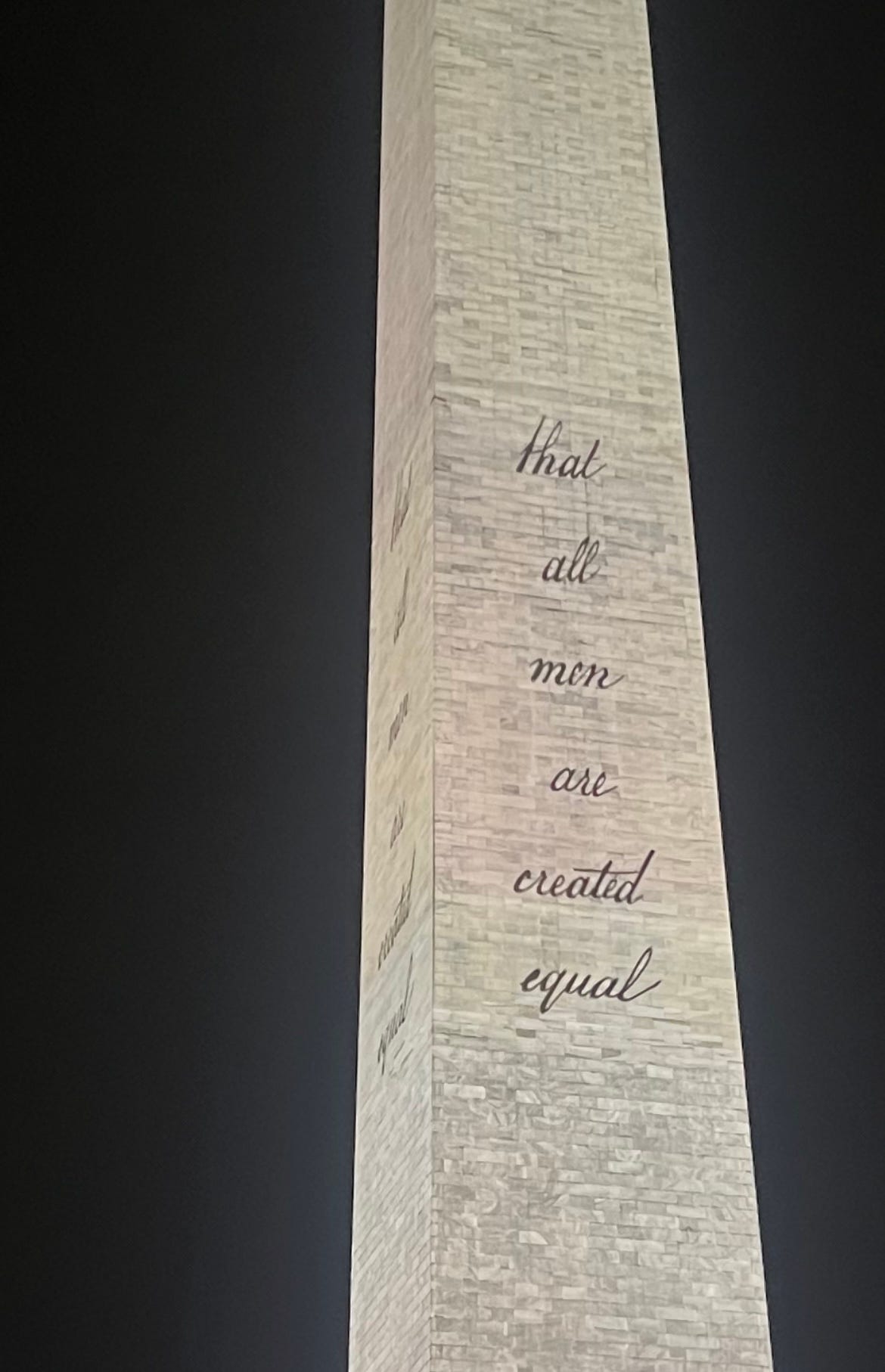
“Equality,” George Packer writes in Last Best Hope, “is the hidden American code.” I know I’ve quoted him a lot lately, but I really vibe with how this book (subtitle: America in Crisis and Renewal) explains the division of the country into four distinct parts and how we can put ourselves back together. “Equality is the first truth of our founding document, the one that leads to all the others,” Packer writes. We are possessed of an “instinctive egalitarianism.” It’s “the code of equality,” he claims, that “shapes so many things in American life. It helps to explain our reputation for being blunt,” among other characteristics. Any attempt to breach it is destined to fail.
The desire to be equal, the individualism it produces, the hustle for money, the love of novelty, the attachment to democracy, the distrust of authority and intellect — these won’t disappear. A way forward that tries to evade or crush them on the road to some … utopia will never arrive and instead will run into a strong reaction.
Toward Millwood, Berryville, and Bluemont
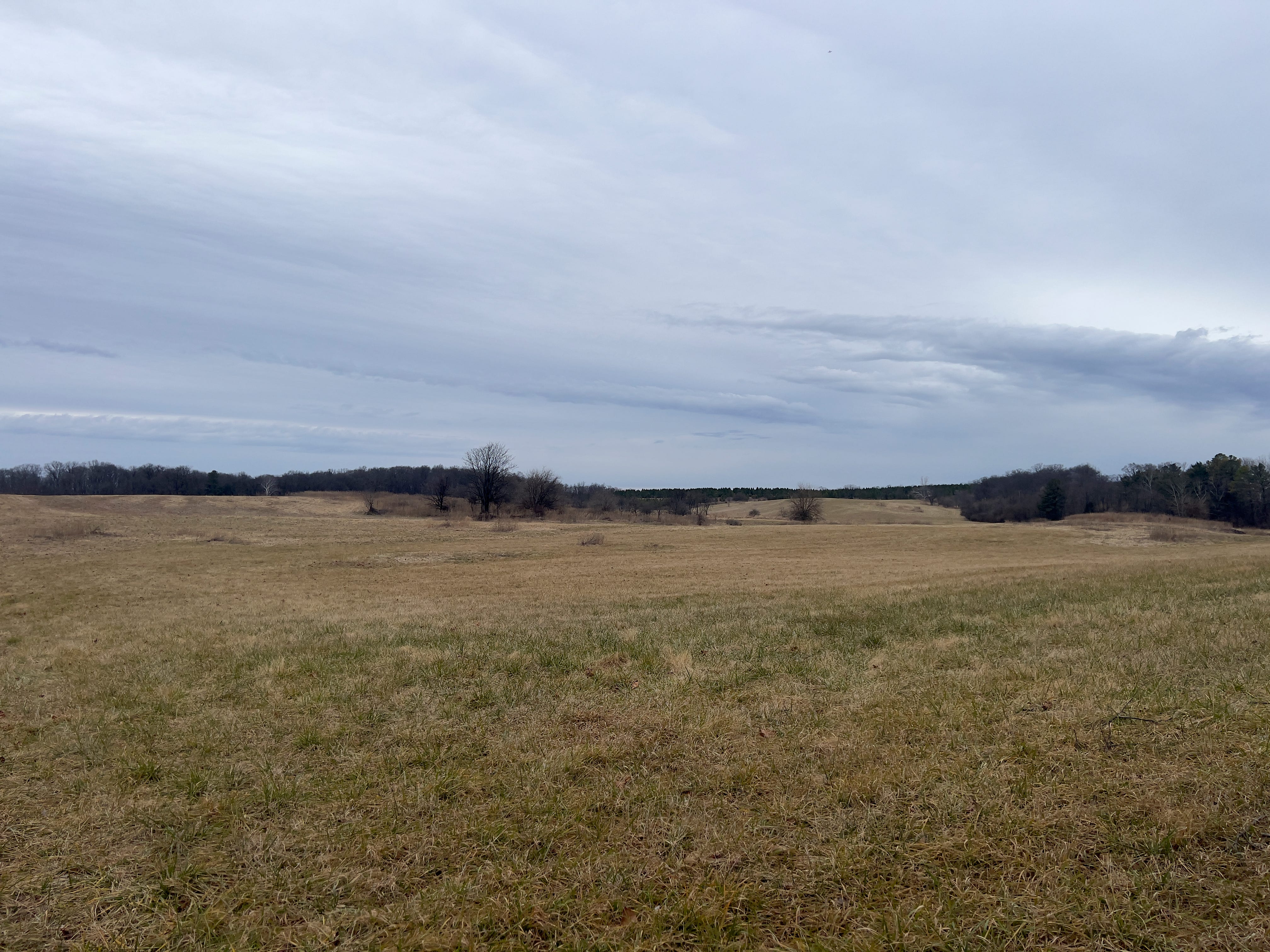
One of the lovely things about leaving the eye of the storm is that only 75 minutes into the countryside, one can hear the lilting sounds of a Southern accent. People often gripe about northern Virginia traffic, and it’s true that driving through it (especially at night) can feel like making your way through a tangled clump of Christmas lights, but this treachery is relatively brief. Once it’s over you’re swiftly in the land of pickup trucks, sheep grazing, and leisurely porchfront salutations. It’s also wonderful to see the Blue Ridge mountains rising in the distance like ripples of water, each wave lighter than the last.
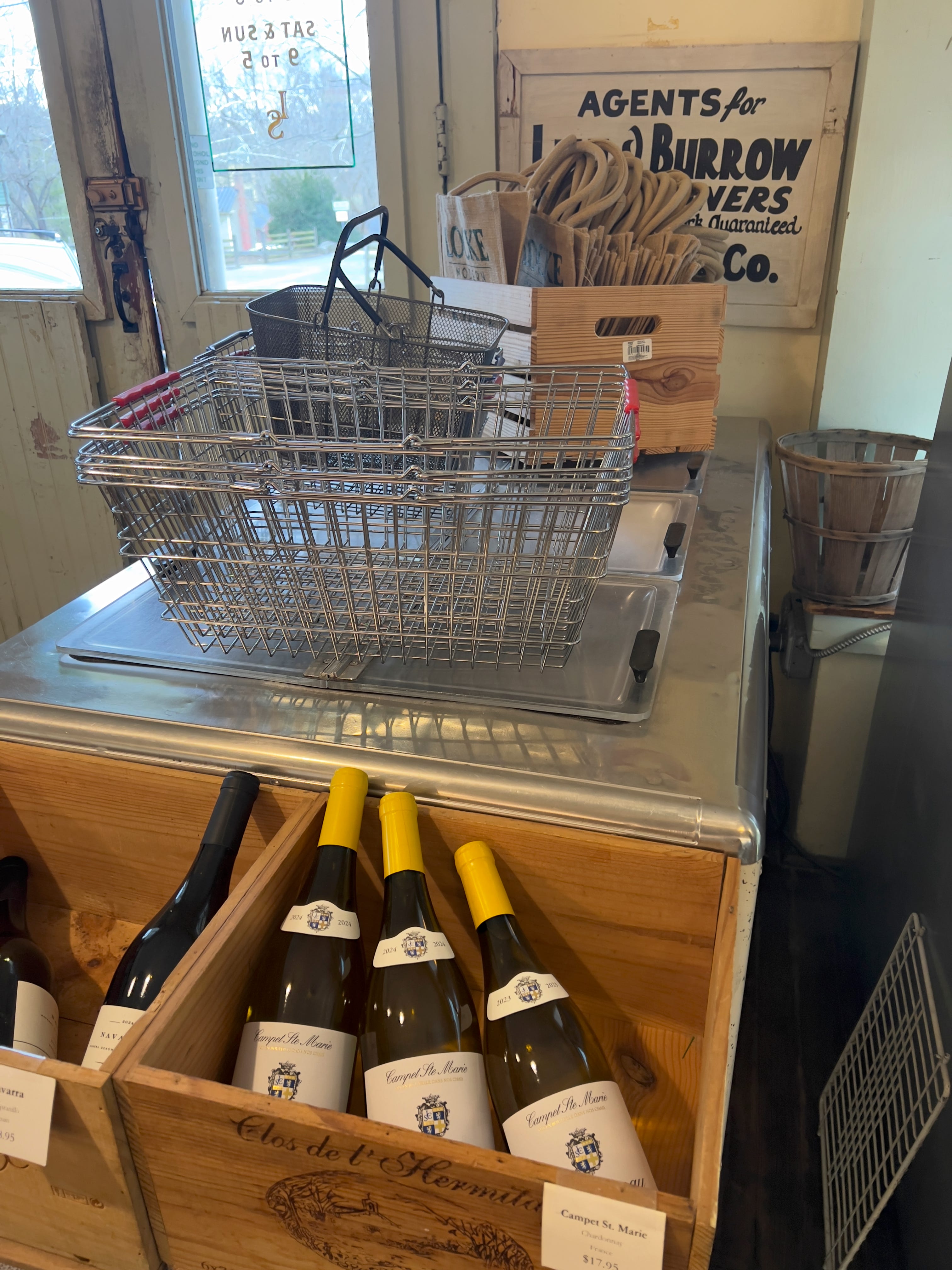
I have three recommendations for people who want to take a day trip. The first is the Locke Store in Millwood, a kind of haute-country market and petite foodie paradise. In addition to a vast collection of wines, they also have a full coffee bar and exquisite sandwiches. The staff is very nice and will tell you lots of other special places nearby.
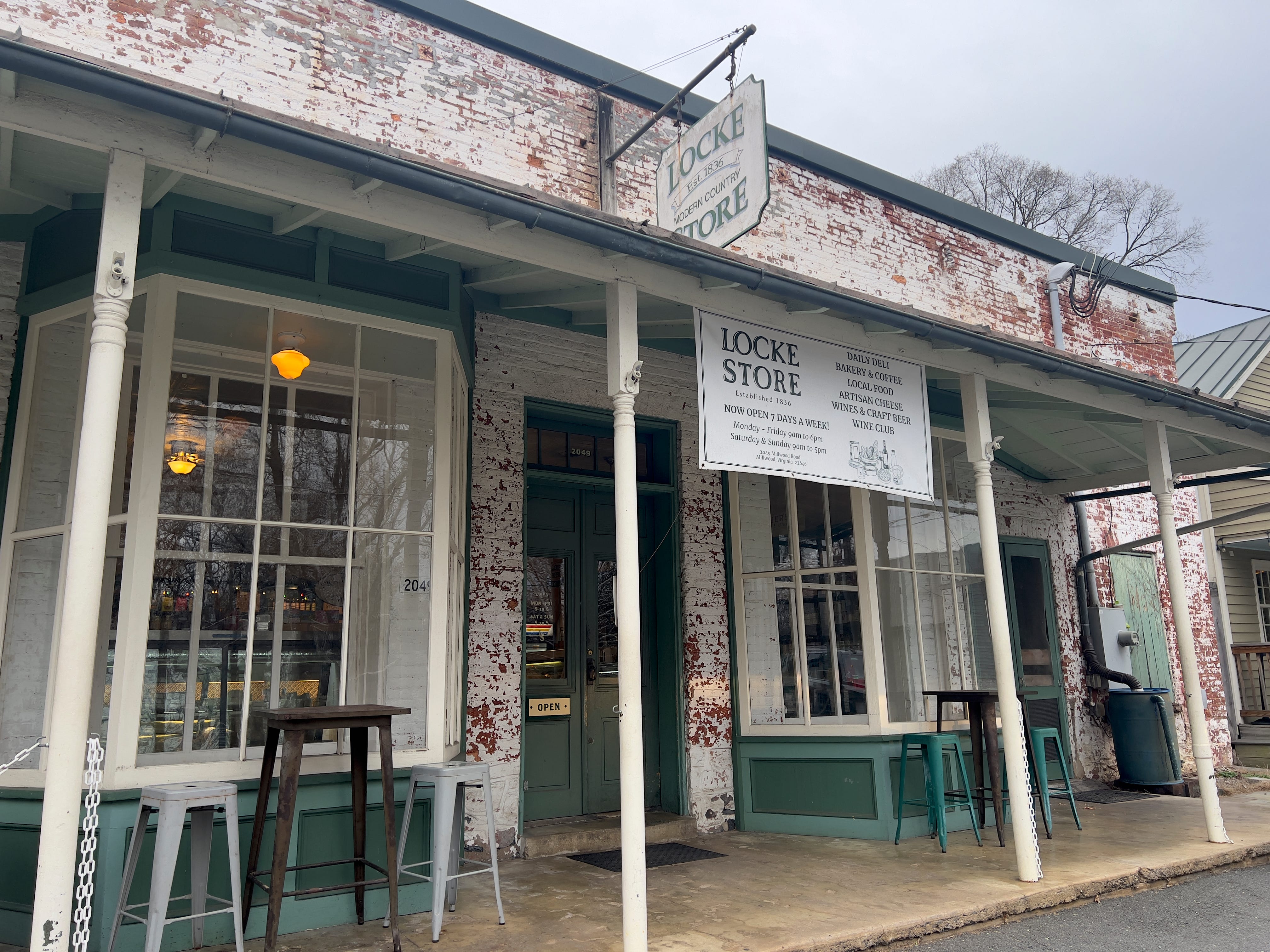
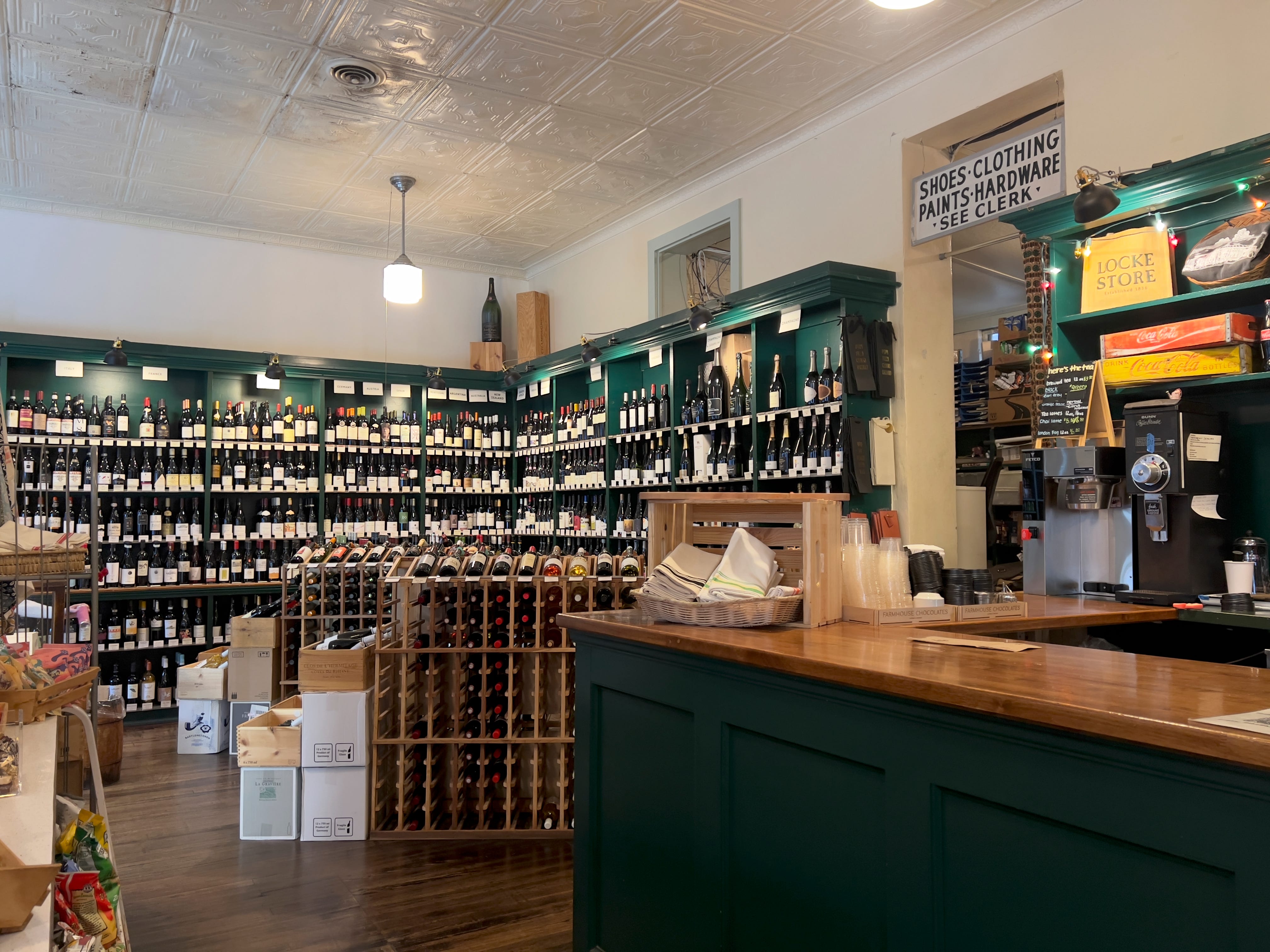
The second is the Bluemont General Store, about twenty minutes away. More of an olde-fashioned country shoppe, it has plenty of staples as well as used books, coffee and hot chocolate, Virginia-themed gifts, a deli, and affordable to-go snacks like ham on a roll and hardboiled eggs.
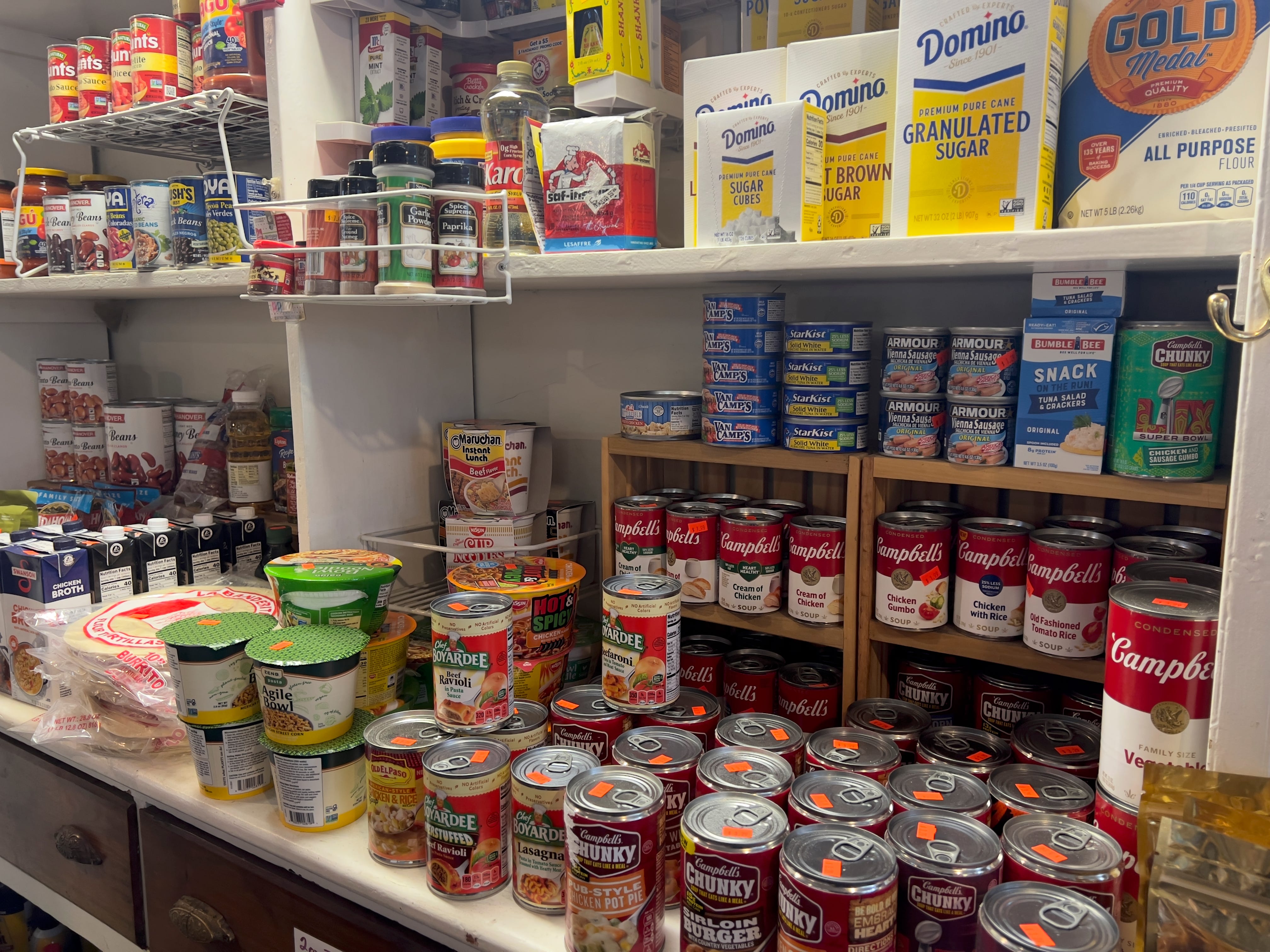
There’s something so comforting about seeing these classic American brands stacked so neatly on this shelf. I feel like they are part of my DNA, like knowing the Pledge of Allegiance. The people here are also friendly and can tell you about nearby farms if you are seeking an animal encounter, or just want to take a walk.
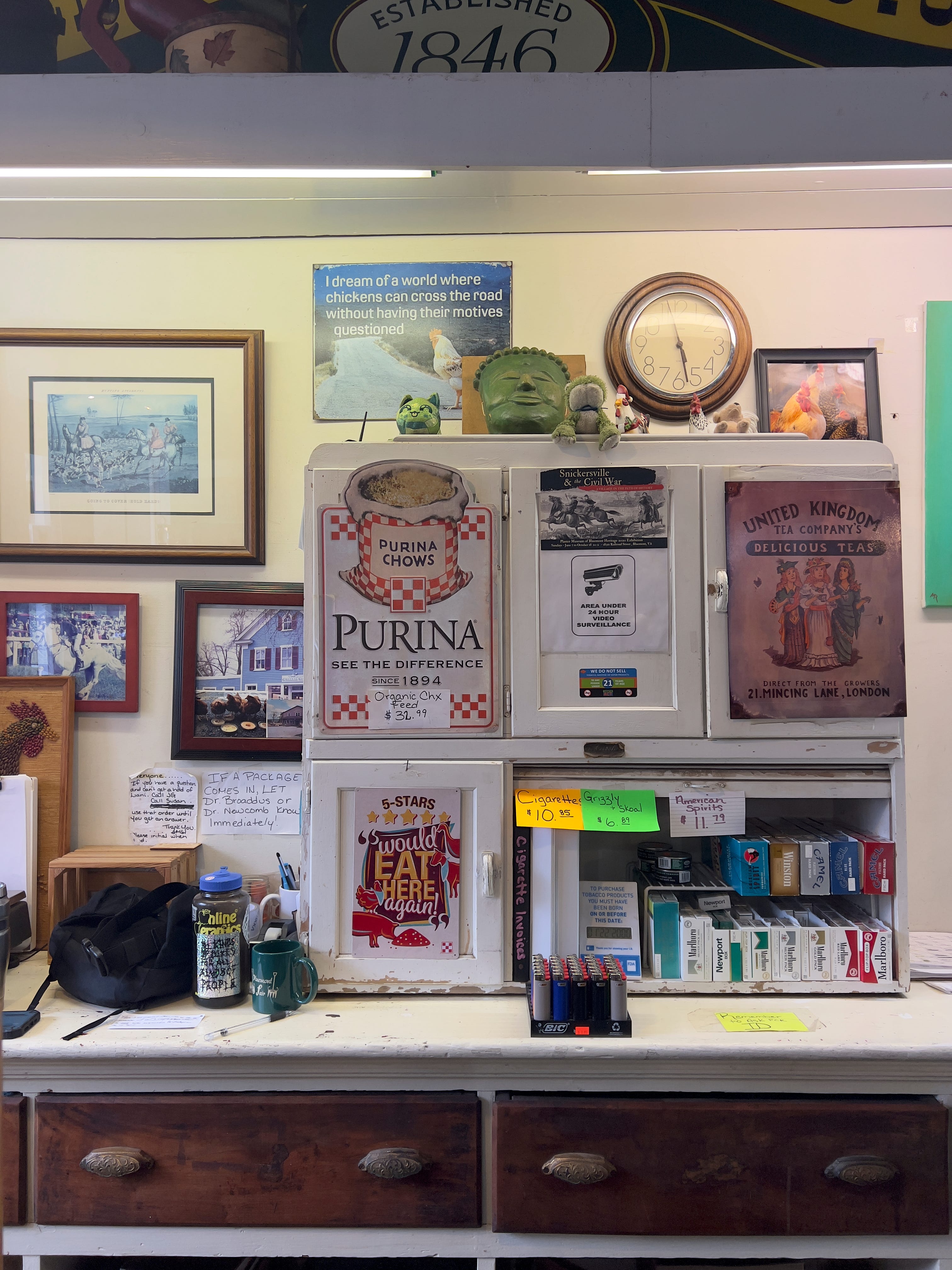
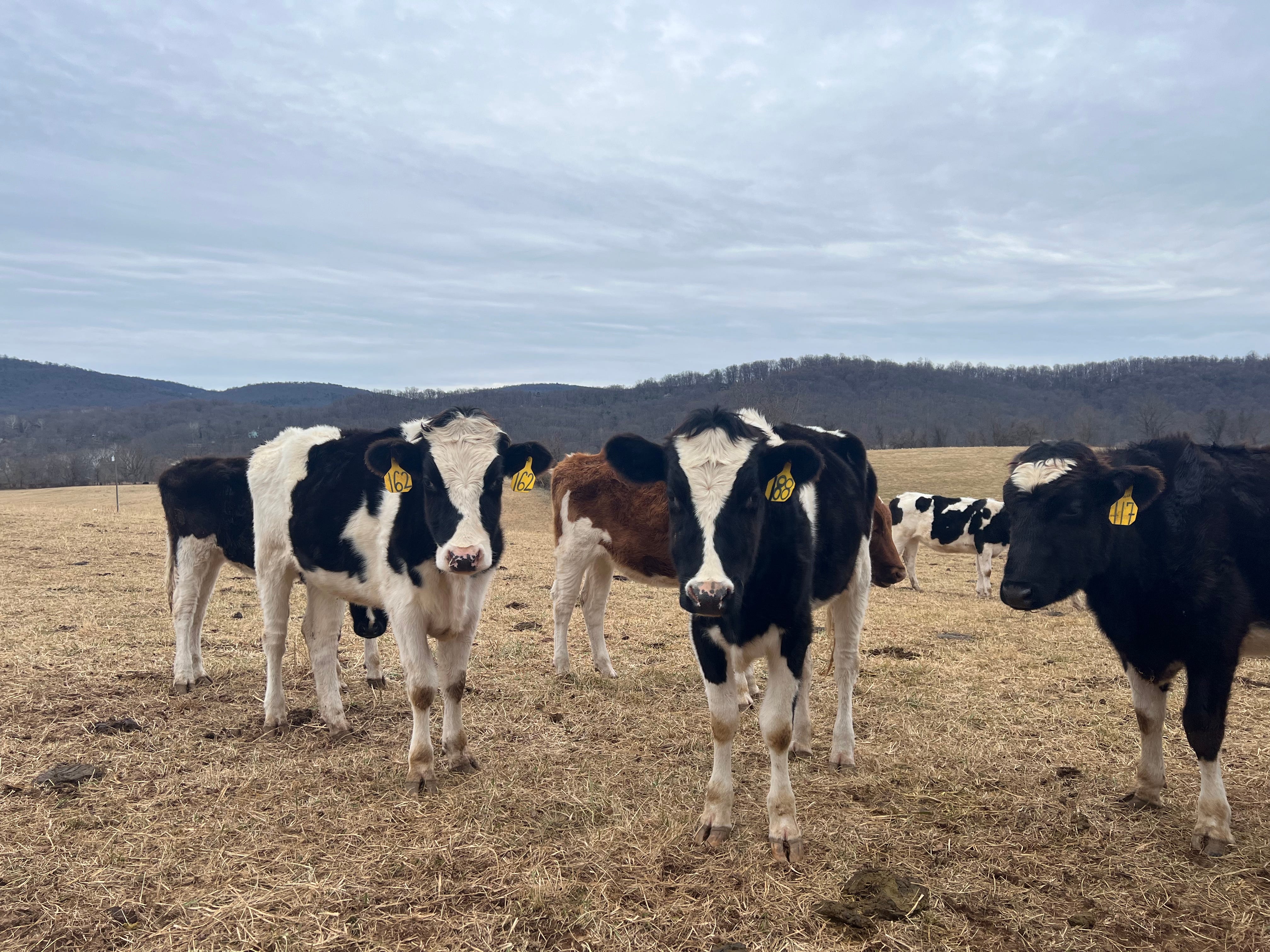
And lastly, I love the Berryville Old Book Shop. It’s delightfully overstuffed, somewhat like The Newsroom I previously wrote about. Here, one can find an entire shelf of books about Thomas Jefferson, or an equally extensive section on firearms. There is nothing less than half of an entire bookcase devoted to cats.
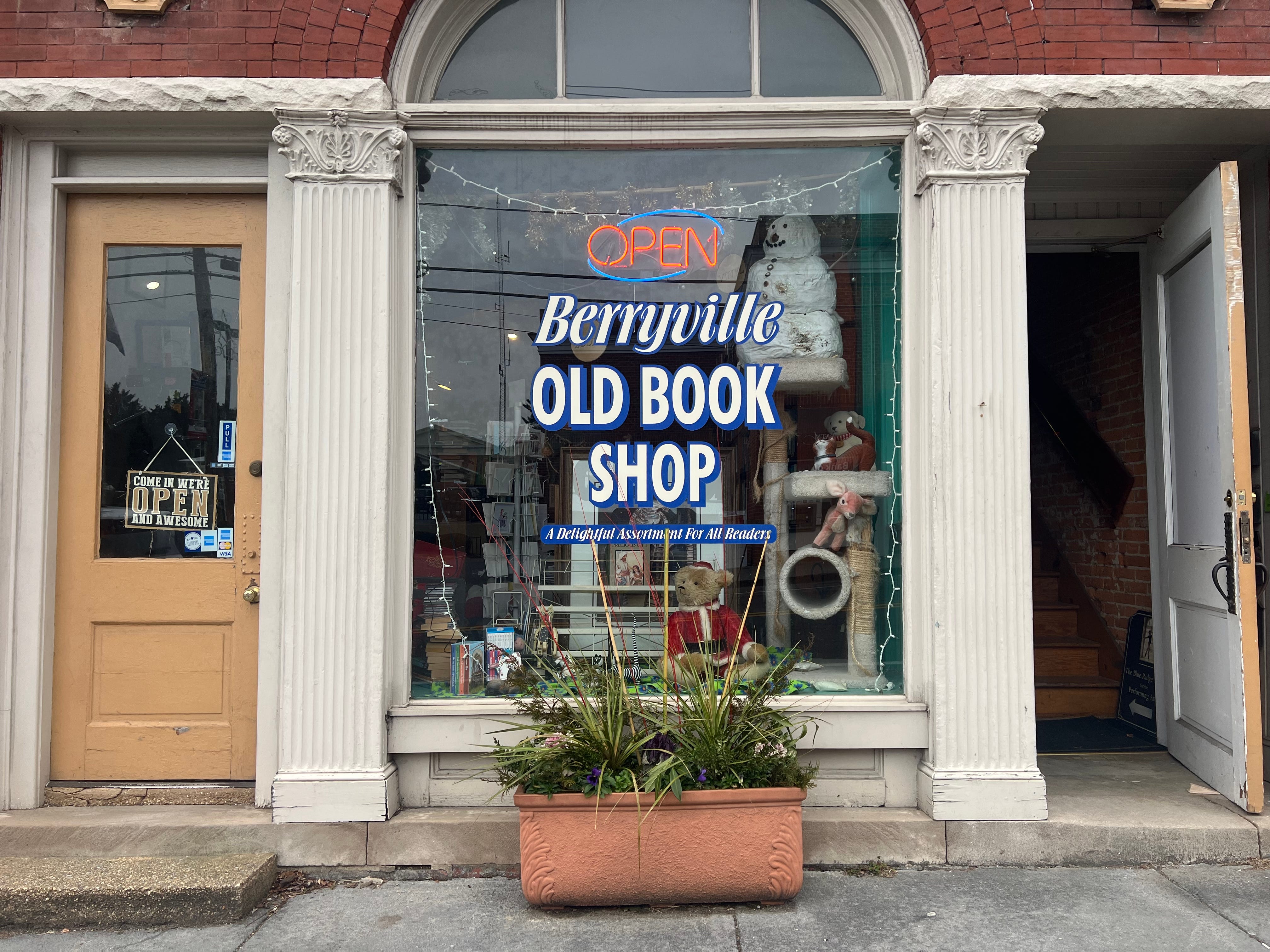
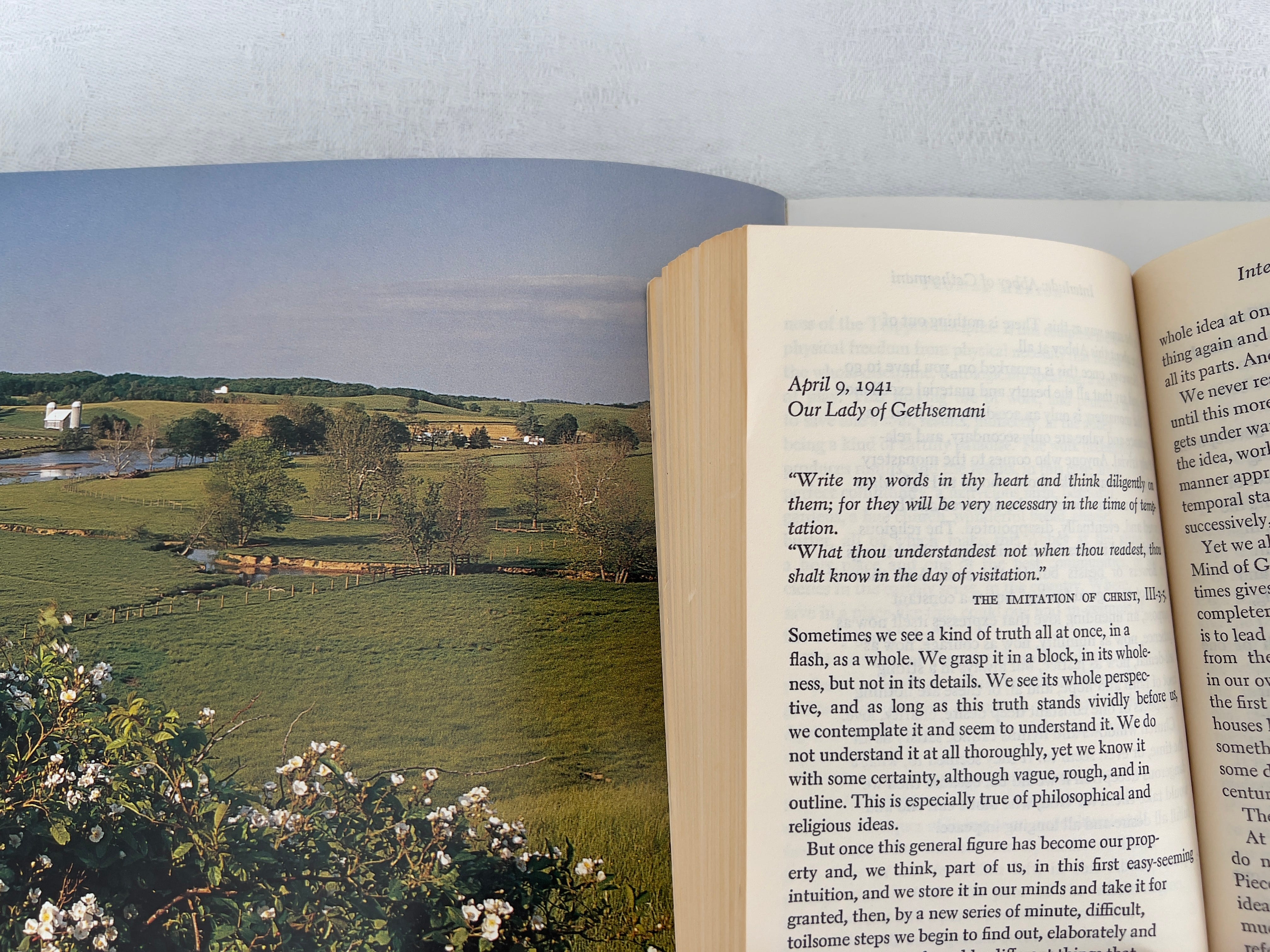
I acquired a cookbook called Virginia Celebrates, a photography paperback called Shenandoah Valley: Impressions, and The Secular Journal of Thomas Merton (his youthful diary from before he entered the monastery). All for the price of one Andrew Jackson.